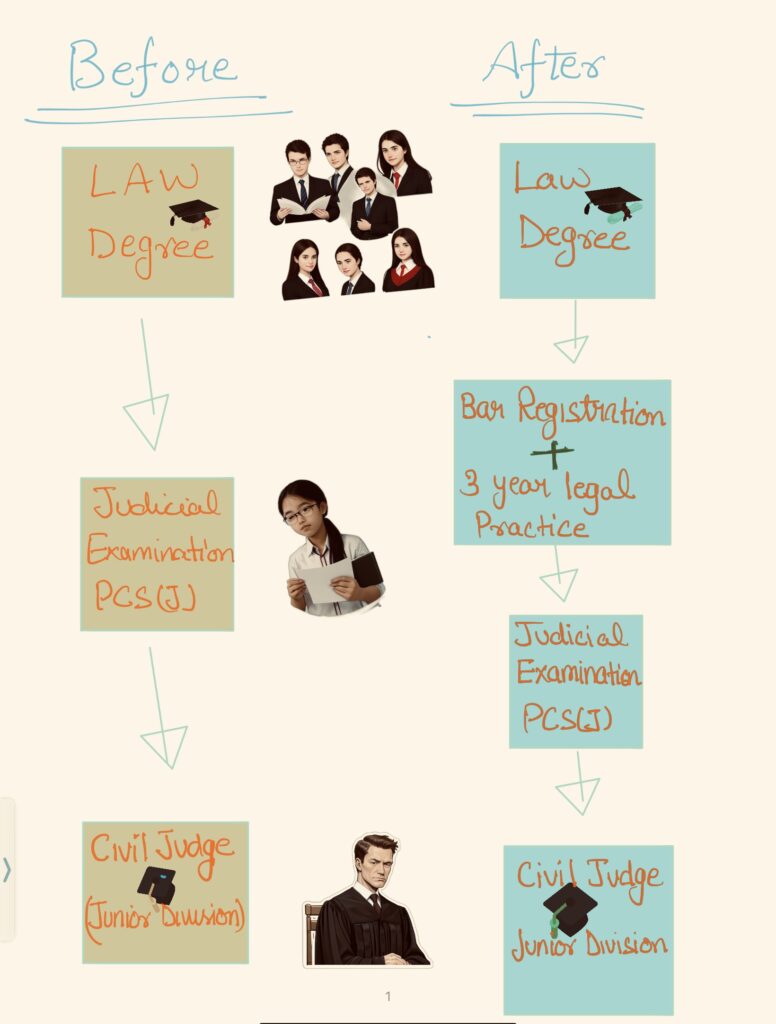
Now to become a Judge you will have to practice as a registered advocated for at least 3 years.
On Tuesday 20 may 2025 , the Supreme Court of India ruled that Candidates must have practised for a minimum period of 3 years to be eligible to appear in the examination of Civil Judge(Junior Division).
Supreme Court said “ TO BECOME A GOOD JUDGE , IT IS NECESSARY TO BECOME GOOD LAWYER “.
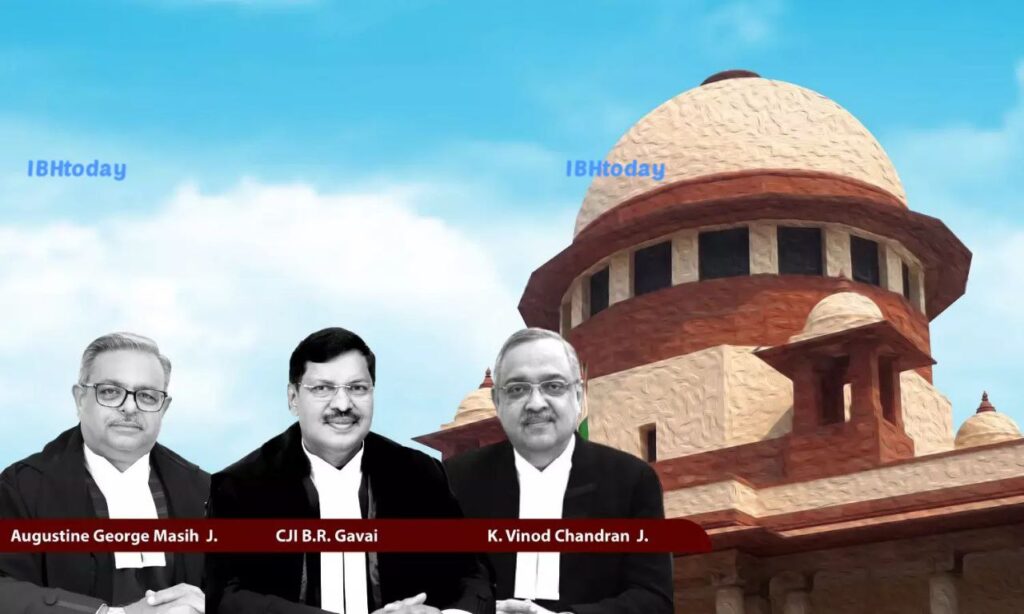
The Supreme court in the three Judges bench of B.R Gauai CJI, A.G. Masih and K. Vinod Chandran restored the requirement of minimum 3 years of practice at the Bar for candidates appearing in the Civil Judge (Junior Division) examination.
Court Further added that three year practise will be counted from the date of provisional enrolment.
Additionaly Supreme Court mandate that all entrants to the Judical services must undergo one year of training before presiding over any court proceedings-
The Supreme Court also said that these rules will not be applicable to ongoing exams. After this, it will be applicable in any new recruitment that comes out.
The Supreme Court has given instructions to all the state governments that the state governments should amend their respective rules under the new guidelines and implement the new rules from new cycle of recruitment.
The Supreme Court also clarified how 3 years of practice will be considered certified.
If a candidate is practising in the High Court or Supreme Court then a certificate shall be issued by an advocate with at least 10 years of standing . Supreme Court also said that if a candidate is practising as a law clerk with a Judge, that too will be counted in legal practice.
Reason for this Judgment:
- Judicial Officers Needs Practical Experience
- Lack Professional Understanding
- Lack Of Maturity
- Lack of skill in writing clear and effective judgments
The Supreme Court has re-implemented this rule so that the new judicial officers who are appointed have a fundamental understanding of the courtroom procedure and the skill of their legal practice.
And another main reason for adding this criteria is that in the past few years many complaints have been filed against the newly appointed judges of their behaviour, lack of practical knowledge, misconduct with senior advocates, not giving importance to Junior practitioner, Ego issues and many others.
Background
In 1993 Supreme Court in case All India Judge’s Association and others v. Union of India (1993) court ruled that state judiciary should appoint only those who had at least three year of legal practice.
In 2002 after Shetty commission’s recommendation in case All India Judges Association and ors. v. Union of India the Supreme Court had observed that Judges need practical experience but at that time it was not made compulsory for Judicial exam. And some state followed the ruling of 1993 they made compulsory 3 year practice for their state judiciary exams.
Impact
After this new debate started. Many are in favour of this implemented new rule and others are not happy with this restored decision to become judge.
While practicing their senior may not offer any kind of incentive or basic stipends to juniors. This becomes a big problem to students who is doing preparation and practice same time and who belongs to poor or middle class .
Aspirant may use fake certificates to show their eligibility. Every aspirant may not get equal chance to appear in exam. It will decrease the chance of promotion of judicial officers in big states. And many may not reach to high court at the end of their job.
Aspirants argue it will lengthen and complicate their preparations. And many law graduate might not see a career in judicial services.